
DIHAD Sustainable Organisation, IFRC, and UNU-IIGH Lead Global Dialogue on Human-Centered Health at the World Health Summit 2025

Landmark Roundtable in Berlin Produced Actionable Recommendations to Inform Upcoming Policy Dialogues at the World Health Assembly (WHA), United Nations General Assembly (UNGA), and G20 Forums
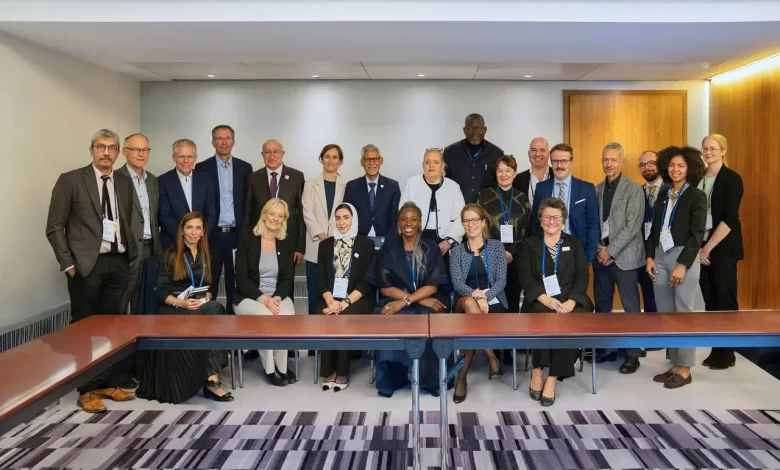
Berlin – 13 October 2025: Guided by its enduring commitment to advancing humanity through sustainable action, the DIHAD Sustainable Organisation, in partnership with the International Federation of Red Cross and Red Crescent Societies (IFRC) and the United Nations University International Institute for Global Health (UNU-IIGH), co-hosted a high-level roundtable discussion during the World Health Summit 2025 which was held in Berlin.
Under the theme“Towards a New Global Health Ecosystem: Reimagining Effectiveness, Coordination, and Investment for a Human Rights-Based, Resilient Future,” the dialogue brought together global decision-makers, humanitarian leaders, and public health experts to reimagine the future of global health through empathy, collaboration, and shared responsibility ensuring that people remain at the core of every solution and policy for a more inclusive and resilient world.
The discussions addressed key priorities to advance humanitarian and health sustainability while exploring how humanitarian and health systems can adapt to financial strain through innovation and systemic reform, strengthen coordination through shared governance, and build cross-sector partnerships that respect local realities while promoting global efficiency. A key outcome was a joint commitment to publish a white paper with actionable recommendations to inform upcoming policy dialogues at the World Health Assembly (WHA), United Nations General Assembly (UNGA), and G20 forums.
The roundtable started by welcoming remarks from Prof. Axel Pries, President of the World Health Summit, His Excellency Mr. Jagan Chapagain, Secretary General of the International Federation of Red Cross and Red Crescent Societies (IFRC), and His Excellency Amb. Dr. Abdulsalam AlMadani, Chairman of DIHAD Sustainable Organisation and Chairman of DISAB, Roving Ambassador of the Parliamentary Assembly of the Mediterranean (PAM) for the GCC Region.
The discussion brought together key figures including Mrs. Sara Madani, Member of the Board of Trustees of DIHAD Sustainable Organisation H.E. Ms. Mónica García Gómez, Minister of Health of Spain, Prof. David McCoy Policy Research Lead at the United Nations University International Institute for Global Health (UNU-IIGH), Dr. Petra Khoury, Global Director of Health and Care at IFRC, Dr Sania Nishtar, CEO, Gavi, John-Arne Røttingen, CEO, Wellcome Trust, Ms. Marionka Pohl, Senior Director of Policy at Seed Global Health, and Ms Anjela Jenkins, Senior Director, Global Inclusive Health Advocacy, Special Olympics, while the session was moderated by Ms. Anne Bergh, Special Advisor, IFRC
H.E. Amb. Dr. AlMadani emphasized the urgent need for inclusive global health solutions, stating:
“The future of global health cannot be built on split efforts. We must unite and move from responding to crises to reshaping the systems that produce them. Aligning humanitarian action with sustainable health systems is not just the right thing to do; it is the only path to a future where dignity, equity, and resilience are possible for all.”
He added, “We are entering a new era where health diplomacy must lead development. Collaboration between governments, the private sector, and humanitarian institutions is no longer a choice; it is the foundation of global stability and peace. Moreover, Global progress depends on how deeply we listen to those we serve. When communities are seen as partners, not recipients, every solution becomes more lasting, more human, and more effective.”
Reiterating on this call for collaboration, Mrs. Sara AlMadani highlighted the essential role of communities in shaping sustainable health outcomes and emphasized empowering local leadership, fostering participation, and investing in solutions that are rooted in the realities of the people they serve.
Mr. Jagan Chapagain, Secretary General of IFRC, added:“In today’s interconnected world, humanitarian action, health systems, and organizations must work hand in hand. Collaboration across governments, local communities, and global institutions is essential to ensure that no one is left behind. Together, we can create health solutions that are sustainable, inclusive, and resilient, placing people at the heart of every decision.“
The World Health Summit 2025 gathered over 4,000 on-site participants and 10,000 virtual attendees, featuring 400+ speakers across 70+ sessions that discussed the most pressing challenges and opportunities in global health. This year’s summit emphasized the critical intersection of health, climate, technology, and equity, with a strong focus on leveraging Artificial Intelligence to enhance health outcomes and resilience worldwide.
This collaboration marks a defining milestone for DIHAD Sustainable Organisation’s mission to drive sustainable humanitarian solutions. It highlights the organisation’s steadfast dedication to creating meaningful changes, empowering communities, and inspiring a global movement toward a healthier, more equitable world.


Leave feedback about this