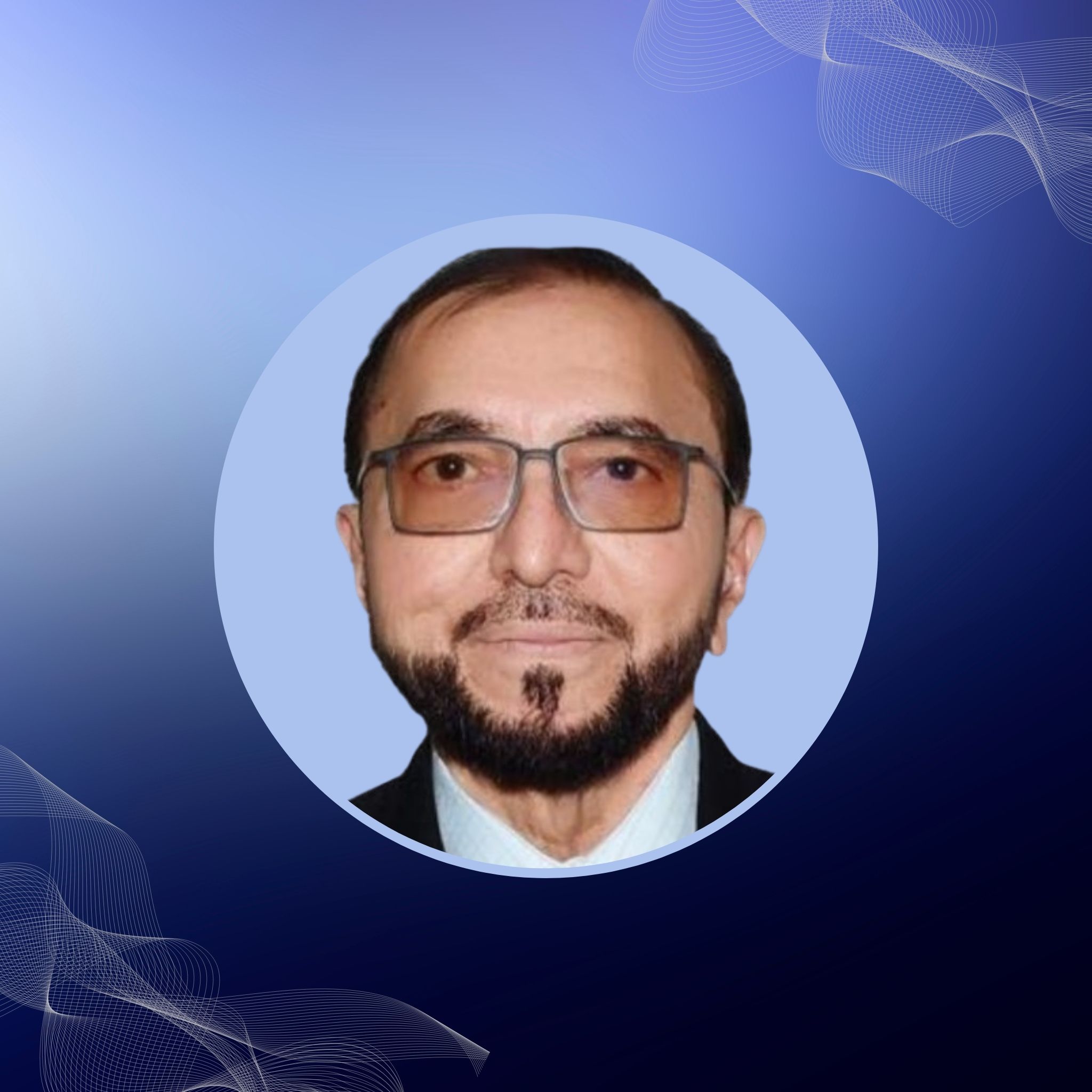
Dr. Syed Anwar Khursheed: Bridge Builder & Community Catalyst
An Exclusive Feature Interview with MedGate Today Global
Dr. Syed Anwar Khursheed has served the Saudi Arabian and expatriate Indian community for over four decades in medicine, education, and humanitarian service. From his decades in critical care medicine, his work with the Saudi Royal Protocol, his role in founding the International Indian School in Taif, to frontline COVID-19 care and vaccine advocacy, his life has been defined by compassion, leadership,and sacrifice. Recognised with the Pravasi Bharatiya Samman Award 2025, he continues to build bridges between communities, nations, and generations. His guiding philosophy has always been simple yet profound: honesty, integrity, sharing, and building relationships with trust and understanding.These values, he believes, are the true foundation for building societies.
You have served in the Saudi healthcare sector for over four decades. Looking back, what
motivated you to dedicate your life to medicine and community service abroad?
From an early age, I felt medicine was not just a profession but a calling to serve humanity.When I came to Saudi Arabia in the late 1970s, I saw both opportunities and challenges for expatriates.I was inspired to dedicate my life not only to clinical service but also to the welfare of the Indian community.The sense that one could heal, comfort, and also create institutions for future generations gave me my purpose abroad. Over time, my focus shifted from personal responsibilities to service of the wider community. That required sacrifices — time, energy, and often resources of my own. Yet as the proverb says, “Service to humanity is the rent we pay for our room on earth.” My wife Anjum and our children,Adnan and Abeer, made these sacrifices with me, and without their support, none of this would have been possible.
Having worked in critical care, emergency medicine, and family medicine — including as a Royal Protocol physician — what experiences stand out as the most defining moments of your
career?
Each role taught me something unique. My three decades in the ICU at the Ministry of Health’s King Faisal Medical Complex were formative. In critical care, every second mattered — lives hung in the balance, and resilience was forged in the intensity of those moments. Later, when I was called to Riyadh to serve under the Ministry of National Guard in the Medical Protocol Department, I cared for members of the Saudi Royal Family. That work demanded precision, discipline, and complete confidentiality. These two experiences could not have been more different, yet they complemented each other. In the ICU, I learned urgency; in Protocol, I learned discretion. And in family medicine, perhaps most rewarding of all, I saw entire generations of patients grow — building bonds of trust that lasted lifetimes. “The best way to find yourself is to lose yourself in the service of others.
You founded the International Indian School in Taif and supported the establishment of other
schools. What challenges did you face in creating educational opportunities for Indian
expatriates?
Founding the school in Taif was an act of faith. We began with almost nothing — no infrastructure, no recognition, no certainty. Yet we persevered. Parents could now keep their children with them rather than send them back to India with one parent, and this gave families immense comfort. Today, it is a
matter of pride that IIST alumni are professionals scattered across the globe. An institution born of sacrifice has become a beacon of achievement. As I often remind the younger generation: “Education is not preparation for life; education is life itself.
For three decades, you have served Indian pilgrims during Hajj in Mina and Arafat. What were the key lessons learned from this unique humanitarian responsibility?
Hajj taught me service in its purest form. Patients were often brought unconscious, with no attendant, or sometimes only with an attendant speaking a distant dialect. Such situations tested not only clinical skill but empathy and cultural understanding. Our stay in Mina gave us the opportunity to visit pilgrims and offer services at their doorstep. I worked as a liaison with Hajj teams to ascertain the whereabouts and welfare of patients. When we take care of our guests, how much more should we take care of Allah’s guests? That has always been my guiding principle. Exhausting, yes — but deeply fulfilling
During the COVID-19 pandemic, you provided house calls, video consultations, and vaccination advocacy. How did you manage the pressure, and what message do you have for frontline workers of the future?
COVID-19 was one of the most testing times of my career. I made house calls, embraced video consultations, and strongly advocated vaccination when misinformation threatened lives. Coordinating between hospital teams and anxious families — whether in Saudi Arabia or far away in India — was
immensely challenging but also deeply satisfying. To future frontline workers, my message is: combine skill with compassion, for healing is not just about science but also about presence. “To cure sometimes, to relieve often, to comfort always.” Never forget that reassurance can be as powerful as medicine.
You have also promoted AYUSH systems of medicine in Saudi Arabia. What potential do you see for integrating traditional and modern healthcare in the Kingdom?
The world is moving toward integrative healthcare, where modern medicine and traditional systems complement each other. Saudi Arabia has shown openness to this approach. AYUSH has a role in preventive health, wellness, and lifestyle management, which are critical today. I envision a future where modern hospitals and holistic practices work side by side — blending science with tradition, to
the benefit of patients.
You were recently conferred with the Pravasi Bharatiya Samman Award 2025 by the Hon’ble President of India. What does this honor mean to you personally and to the wider Indian diaspora in Saudi Arabia?
The award is a privilege, but also a greater responsibility. I am grateful to the Government of India, especially the Ministry of External Affairs, for recognising my work. To a modest professional, this recognition was unexpected and humbling. I owe much gratitude to H.E. Dr. Suhel Ajaz Khan — not only as Ambassador today, but during his earlier tenures as Consul (Hajj) and Deputy Chief of Mission. His encouragement was exemplary. The felicitation by the Embassy on Republic Day was unforgettable, and community organisations across Saudi Arabia showered their affection. My hometown Gulbarga now awaits its own celebration. These moments remind me that true honour lies not in the award itself, but in the service that led to it.
Over the years, you have engaged with both Saudi authorities and the Indian community. How
important is cultural fluency and cross-community trust in building long-term bridges?
Cultural fluency is vital. We celebrated Indian festivals of all religions and cultures, along with our National Celebrations — Independence Day and Republic Day — under the banner of the Indian School in Taif. We joined local festivals and summer events under the supervision of H.E. the Governor of Taif. In 2012, I received a token of appreciation from the Governor himself at the inaugural ceremony of the summer festival, a moment of pride for our community. Collaborating with the Jeddah Indian community on summer trips strengthened bonds. The support of Ambassadors, Consul Generals, and officials, together with the trust of Saudi authorities, was always motivating. That trust gave us the
confidence to build a chain of service and sustain it long-term. Trust, after all, is the currency of human relationships.
With rapid advances in medical technology and telemedicine, how do you think healthcare for
expatriates will evolve in Saudi Arabia over the next decade?
Saudi Arabia’s Vision 2030 Health Transformation is ambitious — and rightly so. It promises better access, higher quality, and stronger prevention. We shall be pleased to contribute in whatever capacity we can. Expatriates in particular will benefit greatly from stronger digital health platforms that connect them with doctors back home, AI-assisted diagnostics for faster and more accurate treatment, and robust telemedicine systems that provide access to specialists even in remote areas. “The greatest wealth is health,” and with technology, that wealth will become more equitably distributed. I thank MedGate for this brilliant initiative. By sharing these stories, you are inspiring a new generation of leaders to
dream beyond themselves and build for the collective good.
You have been part of many forums — medical, cultural, and social — that link India and Saudi Arabia. What areas of cooperation between the two countries in healthcare excite you the most today?
Research collaborations, medical education exchanges, and pharmaceutical cooperation excite me most. India’s strength lies in affordable healthcare and pharmaceuticals, while Saudi Arabia is advancing rapidly in digital health and infrastructure. Together, we can not only serve our populations better, but extend healthcare access across the wider region.
You’ve been described as a “bridge builder” between communities. What advice would you give to young Indian doctors or professionals who aspire to make a similar impact abroad?
My advice is simple but firm: excel in your profession, be humble in your conduct, and serve beyond yourself. Respect the culture of your host country while staying rooted in your values. Bridges are built through consistency, sincerity, and trust. To the newcomers I say — I have spent such a great period here, and so can you. Be affirmative, seize the opportunities, and remember: “If you want to go fast, go alone. If you want to go far, go together.”
After such an illustrious career, what continues to inspire and drive you everyday? What legacy would you like to leave behind for future generations?
What inspires me most is not the milestones achieved, but the humility of knowing I could serve. My life has been anchored in honesty, integrity, sharing, and trust — principles that I hope will inspire others. As for legacy, I urge every member of the diaspora to pause and reflect: What will I be remembered for?
Wealth fades, but the service you render endures. If I am remembered as one who made lives better, opened doors for children, and strengthened India–Saudi ties, then I will rest fulfilled. As the proverb says: “Blessed is the influence of one true, loving soul on another.” That, for me, is the true essence of legacy